Dynamic content is email copy, segments, or offers that change based on who receives the message. Instead of sending the same email to everyone, you send variations that respond to subscriber data: past purchases, browsing history, location, lifecycle stage, or engagement level. This matters because generic emails get ignored. Personalized ones convert.
The Core Problem With Generic Email
Most CPG brands send the same message to everyone on their list. A holiday sale email goes to customers who bought last week and customers who haven’t purchased in two years. A product recommendation goes to people who care about that category and people who never will. A reactivation offer goes to someone who churned three months ago and someone who churned three years ago.
The result is obvious: lower open rates, lower click rates, lower conversion. The message is too broad to be relevant. Some subscribers see an offer they’ve already redeemed. Others see a product they dislike. Others see messaging that assumes a purchase they never made.
See what your Klaviyo account is leaving on the table.
Request a free Klaviyo auditDynamic content solves this by making each email responsive to who it’s going to.
How Dynamic Content Works in Klaviyo
Klaviyo, the email platform most CPG brands use, supports dynamic content at two levels: conditional blocks and personalization tags.
Conditional blocks show or hide entire sections of the email based on subscriber attributes. If a subscriber bought Product A in the past 90 days, show them this section. If they haven’t, show them a different section instead. If they’re a first-time buyer, show onboarding content. If they’re a repeat customer, show loyalty offers.
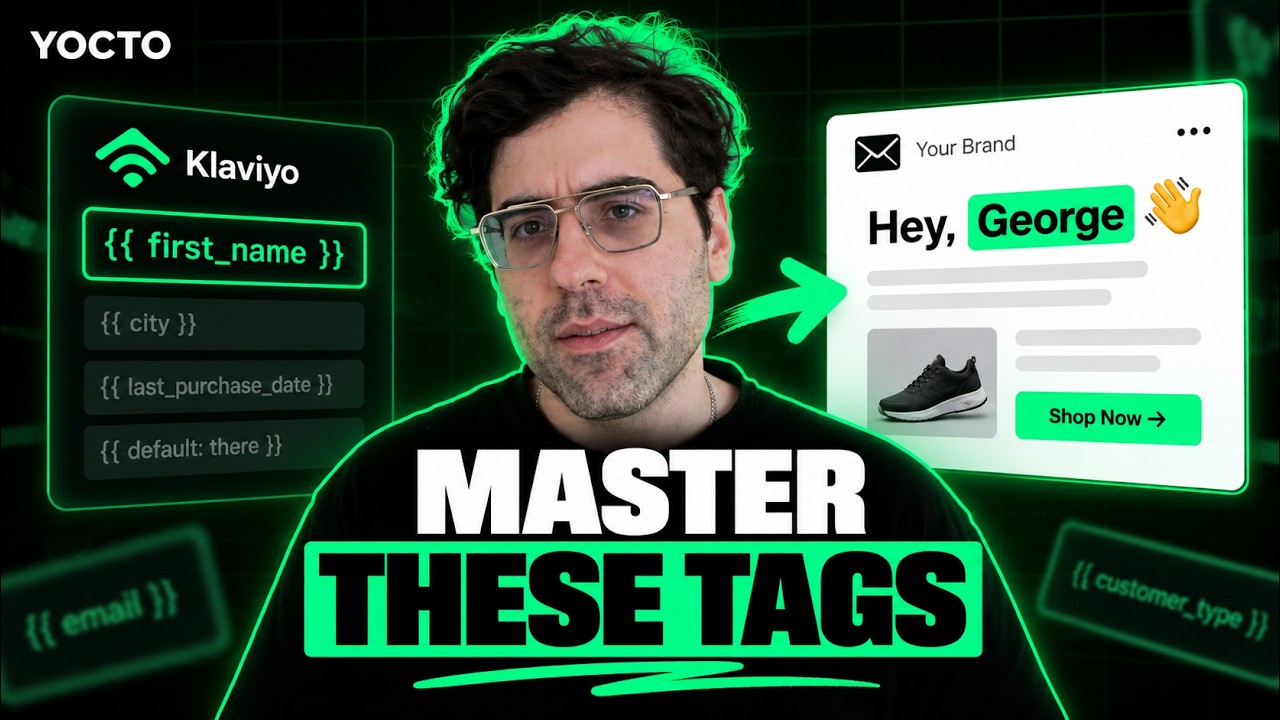
Personalization tags insert specific data into the email: first name, last order date, reward balance, or custom fields you’ve defined. "Hi Sarah" is personalization. "Your next delivery is December 15th" is personalization. "Members who bought X also loved Y" is conditional logic layered on top of personalization.
The combination creates emails that feel written for one person, even though they’re sent to thousands.
Three Types of Dynamic Content That Move Conversion
Not all personalization moves the needle equally. The fastest gains come from dynamic content tied directly to purchase behavior, lifecycle stage, and value perception.
1. Product-Based Personalization
Show different products or product recommendations based on what the subscriber already bought or browsed. If someone purchased your collagen supplement, recommend the vitamin stack. If they bought a single unit, recommend the three-month bundle at checkout. If they abandoned cart with a specific SKU, send them a reminder showing that exact product with a discount.
This works because it meets subscribers where their intent already exists. You’re not introducing new needs. You’re fulfilling existing ones.
2. Lifecycle-Based Personalization
New customers have different needs than repeat customers. Subscribers on their first month need onboarding and reassurance. Subscribers on their third renewal need upgraded options and loyalty perks. Subscribers at risk of churning need benefit reminders and incentives to stay.
Dynamic content lets you send the same campaign name to both groups, but with completely different messaging. The welcome flow for a new subscriber includes usage instructions, expected timelines, and social proof. The renewal reminder for a seasoned subscriber includes upgrade options, exclusive perks, and new product launches. Same campaign, different reality.
3. Offer and Pricing Personalization
Offer one discount tier to price-sensitive subscribers and another to your highest-value customers. Show bundle pricing to repeat buyers and single-unit pricing to one-time buyers. Highlight free shipping for orders over $75 to some, and emphasize convenience for others.
This isn’t about being manipulative. It’s about meeting different segments with offers they’ll actually respond to. A customer with a lifetime value of $3,000 doesn’t need a 40% discount to stay loyal. A customer at churn risk does.
Where Dynamic Content Fails
Dynamic content only works if the underlying data is clean and the logic is simple. Three common failures kill most personalization efforts.
First, incomplete or stale data. If your segmentation relies on "customers who bought in the past 90 days" but your purchase data doesn’t sync with your email platform in real time, the segmentation becomes guesswork. Subscribers get the wrong message.
Second, over-personalization. Creating 15 different versions of the same email for every possible segment exhausts your team and slows down shipping. You ship fewer campaigns because every one takes longer. The reduction in send volume costs more than the improvement in conversion rate.
Third, testing the wrong thing. Testing the color of a button against testing the core offer is not the same. Dynamic content matters most when it changes behavior, not when it tweaks tone. If you’re personalizing the greeting but sending the same offer to everyone, you’re not addressing the main lever.
How to Build Dynamic Content That Works
Start with the segment that matters most for your business. For most CPG brands, that’s the difference between one-time buyers and subscription customers. These groups need completely different lifecycle content.
Map out what each group needs at each stage:
- First-time buyers need reassurance, usage clarity, and result expectations
- Subscription customers need reminder benefits, upgrade options, and loyalty recognition
- Lapsed customers need reactivation incentives and a clear reason to return
- High-value customers need exclusive access and perks that feel worth the investment
Then build the conditional logic. Use Klaviyo’s segmentation to separate these groups, and use conditional blocks to serve different content. Don’t try to personalize everything at once. Start with one campaign: your post-purchase welcome sequence or your billing reminder.
Test whether the dynamic version outperforms the static version. Measure conversion rate, not just open rate. If the personalized version converts 15% better, expand it. If it doesn’t move the needle, kill it and try a different lever.
The mistake most teams make is building complicated personalization and then assuming it works because it feels smart. It has to prove itself against the static version.
When Dynamic Content Becomes a Distraction
Frankly, most retention problems aren’t caused by lack of personalization. They’re caused by weak offers, unclear messaging, or poor onboarding. You can personalize a bad offer a thousand different ways and it will still convert poorly.
If your core offer is weak, fix that first. If your onboarding doesn’t teach customers how to use the product correctly, personalized messaging won’t save it. If your billing reminder is confusing, dynamic content won’t make it clear.
Dynamic content works best when the fundamentals are already in place. You have a strong product, a clear offer, and a functional lifecycle. Now you’re optimizing the angles.
The question to ask before building anything: Will this change how someone makes a decision? If the answer is yes, build it. If the answer is "it would be nice" or "it feels more sophisticated," skip it and focus on something that actually moves behavior.
Next Steps
If you’re operating a CPG brand with a Klaviyo program, audit your current email flows. Identify one campaign where a single dynamic change would make a real difference: separating one-time buyers from subscribers, showing different product recommendations based on past purchases, or adjusting the offer for subscribers at risk of churn.
Run that test. Measure the result against your baseline. If it wins, expand it. If it doesn’t, apply the learning elsewhere.
The brands that move fastest don’t get lost in personalization complexity. They identify the one dynamic change that matters, ship it, and move to the next lever. That’s how you build momentum in retention.
Flows like these are the everyday work of our email marketing agency service.